 — By Joy Ling, MagsBC intern, July 2024. Edited by Doris Fiedrich, December 2025.
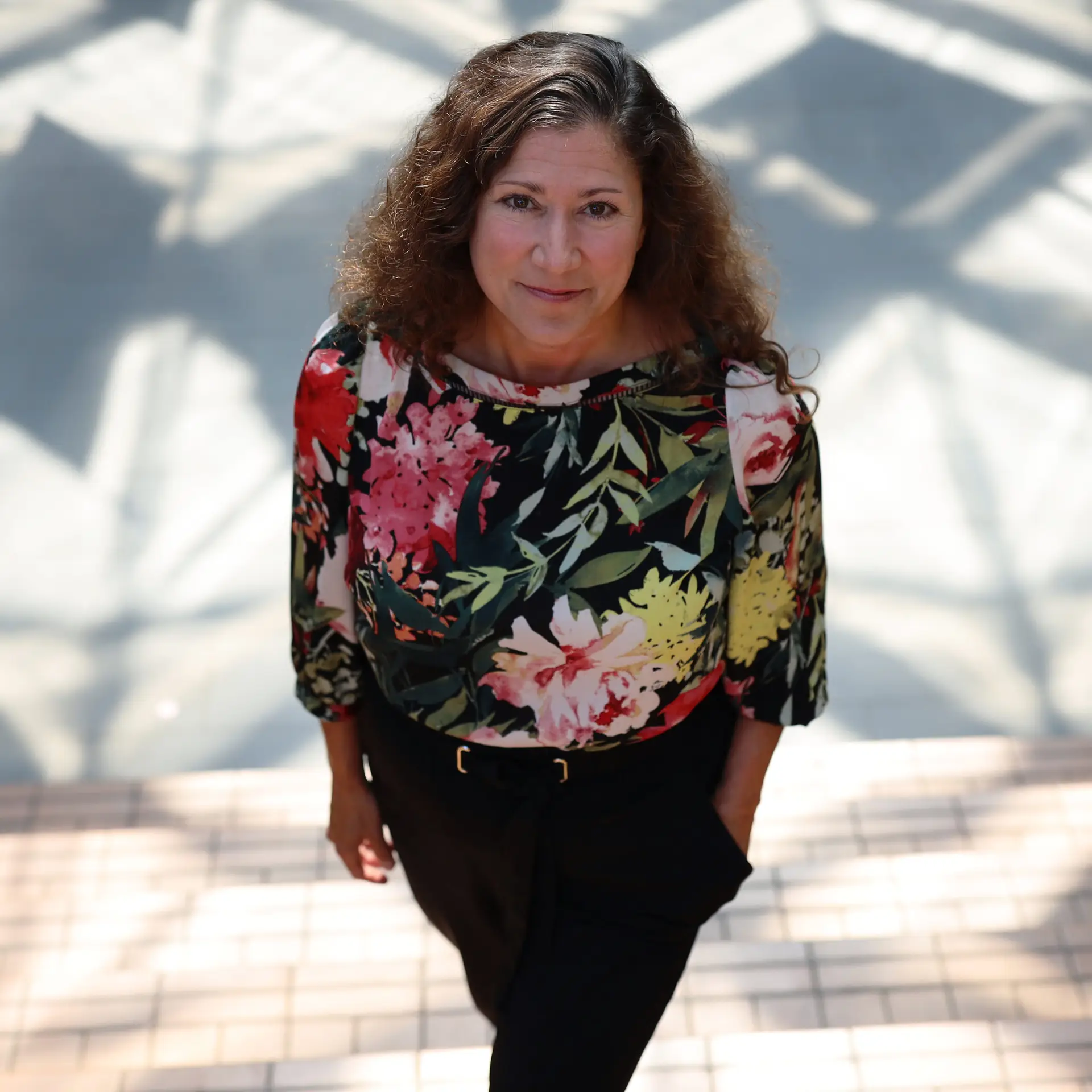
Fiona Bramble is the Managing Editor of Here Magazine and the founder and CEO of REP Here In Canada, a not-for-profit organization that supports newcomers and members of equity-deserving communities in accessing opportunities for meaningful social, civic, and economic participation. She holds a B.A. in Linguistics and English from the University of Victoria.
REP Here In Canada won the national Canada Life 2020 Literacy Innovation Award for the creation and delivery of adult or adult-integrated family literacy programming.
In 2018, Fiona received an Honorary Citizen Award from the City of Victoria for outstanding leadership and service to the community.
You’ve worked as an ELL instructor and teacher before becoming the managing editor of Here Magazine. Could you tell us how you were able to grow your career?
Yes, I taught ELL, or EAL, English as an Additional Language, at a local college for a number of years. I was teaching primarily newcomers to Canada, both domestic and international students and adults. What struck me about their experiences and about their lives here in Victoria was that they, first of all, felt very disconnected from the receiving community, and that their stories weren’t being shared or amplified in any way in our media. As you can imagine, these folks were from every possible place around the world that you can imagine. They were professionals, and some of them were leaders in their fields. The only reason they were studying at the college is that they needed a certain level of English for whatever it is that they were moving on to do. But they were already very accomplished in their own ways.
Those experiences, teaching these students and getting to know them and hearing their lived experiences, really made me want to help connect them to their communities, but maybe more importantly, have the receiving community, in this case, greater Victoria, really see these people and understand what they brought to our communities. That experience as a teacher and building those relationships with my adult students really led to this next part of my career, which was launching Here Magazine and then eventually the not-for-profit organization, REP Here In Canada.
In terms of my career, of course, I was an English instructor, so I had some skills in regard to writing and editing. My background is in applied linguistics and English literature, but I had no idea how to design a magazine. I didn’t know what industry practices were common. I literally learned as I went along. It was a very slow process because I didn’t have a mentor. I was not based in the community at that point, so it was very isolating. Eventually, over time, I threw myself into building relationships in the community, asking industry professionals, getting advice, and all these things helped me improve my skill set around magazine development and, of course, editing. And then, as the team grew, we supported each other in our skill development.
What is one of the most valuable and useful skills you’ve learned through different experiences? How has it helped you, and how has it transferred over into your new career?
It’s been over 10 years, so I wouldn’t call it a new career. I would say what I’ve learned through Here Magazine and the work I do taught me so much, especially because I did learn as I went along, and I’m pretty motivated in developing my skill set. I am tenacious, so I think not giving up, like troubleshooting your way through something, like believing that there is a way to do it, has helped me keep something alive that is very, very difficult.
As you know, magazine publishing is an economically challenging industry. It’s hard, especially working with newcomer communities, to keep people, to keep continuity, and to keep writers on the team and other things like that.
Tenacity and troubleshooting have definitely been the most valuable and useful skills. And this comes from learning design as a newbie, and it sounds a little bit simplistic, but I remember the first time I turned an image. Let’s say I was working in InDesign, and I was developing a page, and I was really having trouble with the space and the concept, and my brain was very much on a traditional, linear kind of thought. I remember, I just turned a visual element a different way, maybe even upside down, and it worked. I realized there are lots of different ways to approach something. I don’t believe that there’s only one way. Again, it sounds simplistic, but that can be applied to telling a story; it can apply to how you do your day-to-day work. I would say that mindset has been very useful for me over the years.
The goal of your magazine is to include underrepresented minority groups in the conversation and provide a space for them to be heard. However, that can also mean covering some serious topics at times. Do you have any strategies to ease your mind if certain topics feel too overwhelming?
Yes, this is very, very true for our editorial team and for our contract freelancers, even if we’re not writing specifically about a serious topic. Everyone, except for me (I’m the only white Canadian on a team), all our team and freelancers are members of racialized communities, so they live these serious topics. Sometimes, it’s simply not just the topic that we’re writing about, but what they’re going through in their day-to-day lived experiences, and that can be very overwhelming and challenging. I say we’re like a family, but I guess I’m the boss. So, as the boss, I would make sure that our team has had time and space to step back or reflect on things that are happening, maybe in their day-to-day, or around the topics that we’re covering.
We just really try and give each other the support and the space we need. We also have a close relationship with a local counseling group in Victoria, where I would direct our members or staff if they need mental health support. But yes, we just generally try and are a supportive family.
We did do a mini documentary on the Indian Day Schools a few years ago, and that had a strong impact on our team. And, of course, during the pandemic, after the George Floyd murder and the discovery of the graves at the Kamloops Indian Residential School, those were all very difficult times for our team and our community. Like I said, we just really try to slow things down and talk openly about how we’re feeling. And then, you know, sometimes the writing can be therapeutic. Also, if you’re giving voices to some of these stories and experiences, that can be quite rewarding, too. So, there’s a balance to doing this work for sure.
Canada, in the past few years, has made significant improvements in terms of inclusivity and cultural diversity, such as Indigenous Truth Reconciliation Day. How have you seen these events, these changes reflected in Here’s content?
I agree with the statement to some degree. On the surface, yes, there’s been promotion around cultural diversity and inclusivity. Truthfully, I don’t know if I’ve seen significant improvements in how people engage with each other on a day-to-day basis in this context. But your question is more around our content. I wouldn’t say it’s changed much. We have our mandate around amplifying newcomer, immigrant and Indigenous voices and experiences, and we continue to do so. I think that’s probably the answer to that question.
Any pieces of advice for individuals seeking a career in editing?
I don’t really consider myself an official editor. I sort of landed in it by default, and there are different types of editing. For example, my son edits legislation for the provincial government.
I want you to love and edit and write what feeds you. I think it’s difficult in publishing, in general—book publishing and magazine and newspaper publishing—to have an actual career and not just be a freelancer. Many editors I know have one or two jobs or move around a lot. I don’t really have any specific advice for this.
How do you predict Here will grow in the future, whether in terms of expanding community or change in the topics being covered?
I just hope we get to write more stories. I would love to do some more visual work, and some more photo essay-style stories. We’d love to do more video and sort of mini-doc work, like filmmaking. I’d really like to see us grow in that way. I can’t see our topics changing too much; like I said, we have our mandate, but it’s hard to know. But yeah, I hope we get to continue to do this great work and improve our skill set in developing other types of content.