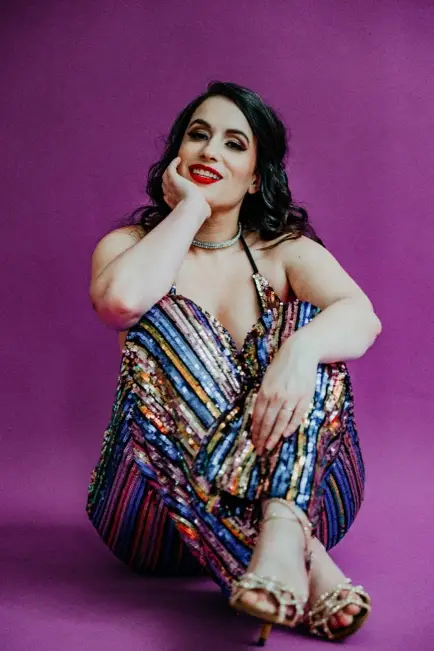
Jessica Key is a queer, disabled editor/arts administrator living in East Vancouver. She grew up in a very small town on Vancouver Island where there wasn’t much to do, but that thankfully it did have both a wonderful library and an amazing bookstore (The Mulberry Bush Book Store) that helped foster a love of reading. Jessica turned that into a Bachelor of Arts in Creative Writing and Journalism at VIU, and then a Master of Publishing at SFU.
I interviewed Jessica to find out more about her story, how she sees the current struggles in the art and literature community, and what advice she gives for people who want to become involved in the magazine industry.
Jessica, how did you first get involved with the magazine industry?
In my undergrad degree, we had to choose a literary magazine to do a presentation on. I chose subTerrain, because it was the first lit mag I ever subscribed to, back when I was 17. I loved that they published different themed issues (recent ones I used in that presentation were Coincidence, Heat, and Pulp), as well as the fact they worked with different artists for every issue. I fell in love with the tone, which wasn’t like anything I’d been exposed to; it was eclectic, provocative, progressive. They were also publishing both established authors whose names I knew and introducing me to emerging writers I didn’t. Joy Gugeler, my professor, made note of my impassioned presentation and made sure to introduce me to Brian Kaufman, subTerrain’s editor-in-chief, when we went to Word Vancouver that fall.
When I moved to Vancouver in 2015 to do my master, I knew I’d do an internship as part of the program, and I reached out to Brian right away and asked if I could intern at subTerrain. It’s now been eight and a half years and he hasn’t gotten rid of me yet (although as noted in the question, I’m definitely not an intern anymore).
Fun fact: my now-husband had a piece in the Pulp issue of the magazine.
I started working at subTerrain in the spring of 2017. That’s also when I personally got involved on the board, initially as a member-at-large, then secretary, and eventually I was president for a few years. I’ve since stepped back from the board but am so grateful for everything they do!
Since 2019, I have been the managing editor at subTerrain.
What do you feel is your favourite part of your work?
I’m going to cheat and say two different things, but they’re loosely connected: sending acceptance letters—because who doesn’t love making someone’s day? And the second part is during production, when the magazine starts coming together and I can really see the issue as a package—illustrations, pieces in order, etcetera. We have such a talented designer, Derek von Essen, who makes every single issue look gorgeous. The only downside is how distracting it is to proofread when I’m just so excited about the magazine.
Where do you see challenges for the magazine?
Arts funding feels at risk right now. Even otherwise stable funding feels like a decrease over time with high production and distribution cost, plus the high cost of living/operating in Vancouver. Working at a small, independent magazine requires hard work, and a lot of thinking on our feet to come up with ways to market the magazine, sell ads, get new subscribers, etc. I’m very grateful that our literary community, and particularly our community of literary magazines, is so supportive of one another.
I do hope that magazines take a hardline stance on not allowing AI-created content on their pages. AI is just plagiarism machines, and allowing its use means artists aren’t being compensated, arts administrators lose jobs, and the climate is being needlessly impacted. Our industry is already underpaid, and our climate is in crisis. Why would we allow AI to further both issues?
Can you think of improvements for the current magazine industry?
I work on the book side of publishing as well, and I think one of the things that books do ‘better’ is that they’re able to collectively advocate for themselves and their needs industry- wide. On the magazine side, we all have such different needs/business models/funding models, but I’d like to see us come together more and get more engaged with the advocacy work that MagsBC (and Magazines Canada) is doing. Putting our support behind things that may not affect our magazines personally, but will strengthen the industry, and/or the arts and culture sector.
What advice would you give to someone who wants to build up a career in editing?
Read widely! But especially read the magazines you want to work for. Be familiar with what they publish, what they don’t, their voice and tone.
And remember to think of the job of editing as a collaboration. I think of myself as being there to invoke the reader. This allows you to preserve the writer’s own voice, not overtake it with your own.
Your favourite quote?
This is a quote from Scott Steedman on my very first day of editing class in master, and it’s always stuck with me: “If you can see yourself doing anything else, do that instead.” This quote might sound demoralizing (and maybe it is), but to me there’s actually something beautiful about it. It speaks to the fact that those of us who are in this industry are here because it’s a vocation. This work is underpaid and often underappreciated, but I get so much creative fulfilment from what I do, and I see the way it impacts everyone involved, the writers and artists I work with, as well as subTerrain readers. So, at the end of the day, I truly can’t see myself doing anything else.
Find subTerrain on their website, Facebook, Instagram and X.